






Trees on the COP agendas
“Thirty-two years on, the interconnectedness of these challenges is clearer than ever – and trees and forests remain central.”
Speaking for the trees
At three UN summits, CIFOR-ICRAF presented key evidence on how tree-based ecosystems can address global crises
The three Conferences of the Parties (COPs) for the United Nations conventions that emerged from the 1992 Rio Earth Summit – the UN Framework Convention on Climate Change (UNFCCC), the UN Convention to Combat Desertification (UNCCD) and the UN Convention on Biological Diversity (UNCBD) – came together over three intense months at the end of 2024.
Thirty-two years on from their creation, the interconnectedness of these challenges is clearer than ever, and trees and forests remain central to the suite of potential solutions. At each of the 2024 COPs, CIFOR-ICRAF advocated strongly for tree-based ecosystems to play a more central role in addressing earth’s most pressing global challenges, presenting key evidence and context-appropriate solutions to audiences who attended these critical fora.
Kicking off with UNCBD COP16 in Cali, Colombia in October, our scientists advocated for the integration of climate, biodiversity and social goals through holistic, nature-based solutions – many of which involve the planting and/or protection of trees and forests. The conference’s outcomes reflected this call for integration, with Parties committing to accelerate the alignment of climate and biodiversity goals.
During the event, the UNCBD and the Collaborative Partnership on Forests – of which CIFOR-ICRAF is a founding member – also launched The Forest Factor – a report highlighting the critical role of forest conservation, restoration and sustainable management in achieving the Kunming-Montreal Global Biodiversity Framework (KMGBF) targets.
The following month, at UNFCCC COP29 in Baku, Azerbaijan, all eyes were on funding for climate mitigation and adaptation. There, CIFOR-ICRAF ensured delegates understood that over the next decade, forests could provide up to 50 percent of the cost-effective mitigation available. The COP Presidency’s priorities of enhancing ambition and enabling action channelled interest towards CIFOR-ICRAF and partners’ work on mitigation and adaptation, sustainable land management and low-emission development.
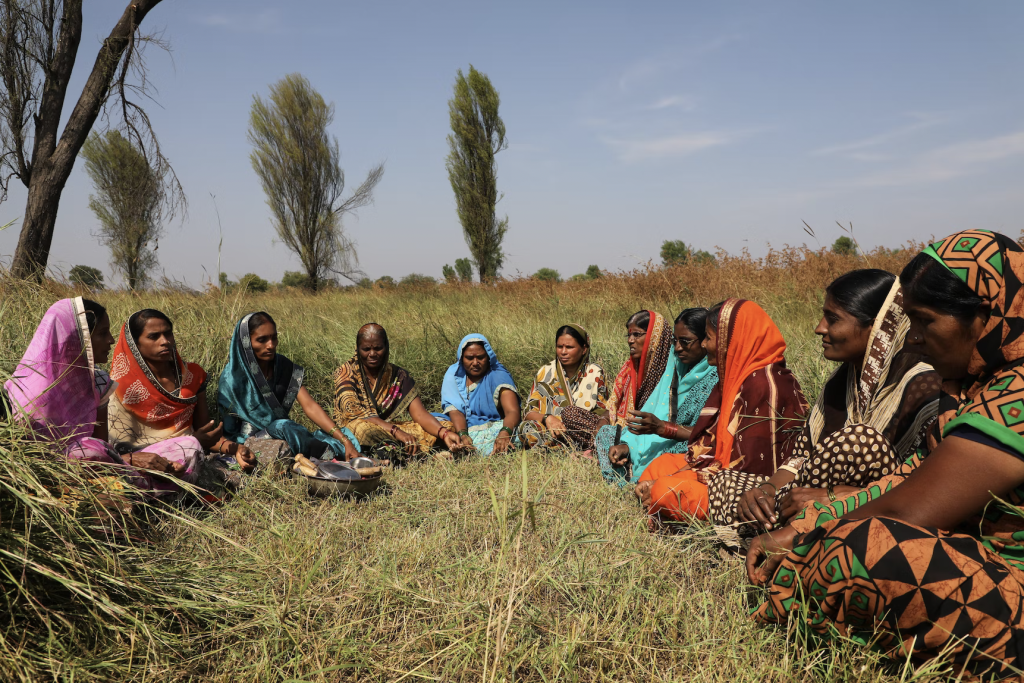
Photo caption
Completing the trifecta in December, UNCCD COP16 in Baku, Saudi Arabia had land restoration and sustainable land management at its heart. CIFOR-ICRAF had a powerful presence as a global centre of excellence for soil and land restoration, integrated soil information and soil organic carbon accounting.
“We know that about 65 percent of Africa’s soils are degraded, as are a third of soils around the world,” said Éliane Ubalijoro, CIFOR-ICRAF’s CEO. “The health of our soils will determine the health of our food systems, which will determine the health of our global population.” As volumes of our research has shown, trees and forests are one of the most effective nature-based solutions for preventing and reversing degradation and desertification, and this potential was reflected in the conference discussions and outcomes.
Looking ahead to this year’s historic UNFCCC COP30 in Brazil, its country of origin, CIFOR-ICRAF will continue to advocate for the power and multifaceted potential of trees, forests, and agroforestry landscapes for climate mitigation and adaptation, biodiversity, food and nutrition security, land restoration, livelihoods, and more.