









Aiming for the new 30×30 biodiversity target
“Lessons from these pilots can serve as a foundation for advancing global ecosystem restoration through better cross-sectoral coordination.”
Aligning national biodiversity strategies with the new global biodiversity framework
Burkina Faso, Kenya, Vietnam and Peru take aim at Target 2 goal of 30% restoration
With support from CIFOR-ICRAF, four countries advanced towards aligning their national biodiversity strategies with the Kunming-Montréal Global Biodiversity Framework (KM-GBF).
The KM-GBF, adopted at the 15th Conference of Parties (COP15) to the Convention on Biological Diversity in 2022, provides a framework to halt and reverse the loss of biodiversity. For Target 2, countries aim to ensure at least 30% of degraded terrestrial, inland water, and marine and coastal ecosystems are under “effective” restoration by 2030 – known as “30×30”.
Given this new global target for restoration, countries need to review their National Biodiversity Strategy and Action Plans (NBSAPs) to ensure alignment with the KM-GBF. In response, CIFOR-ICRAF launched the Target 2 Pilots project (November 2023–March 2025) to support national dialogues in four countries – Burkina Faso, Kenya, Vietnam and Peru – and to improve policy coherence and cross-sectoral collaboration. The project was funded by the United Kingdom (through the Food and Agriculture Organization of the United Nations).
CIFOR-ICRAF provides technical support to custodian agencies responsible for developing restoration indicators and monitoring platforms in several countries. In Kenya, for example, this includes supporting establishment of the Kenya Technical Working Group on restoration monitoring, contributing to the Forest and Landscape Restoration Implementation Plan and working with counties to develop and establish county-level restoration plans and monitoring frameworks. Its national dialogue included state and non-state actors, focusing on the country’s ecosystem restoration monitoring efforts, developing a collaborative restoration roadmap for progress, and the need to harmonize data platforms and protocols and align overlapping policies.
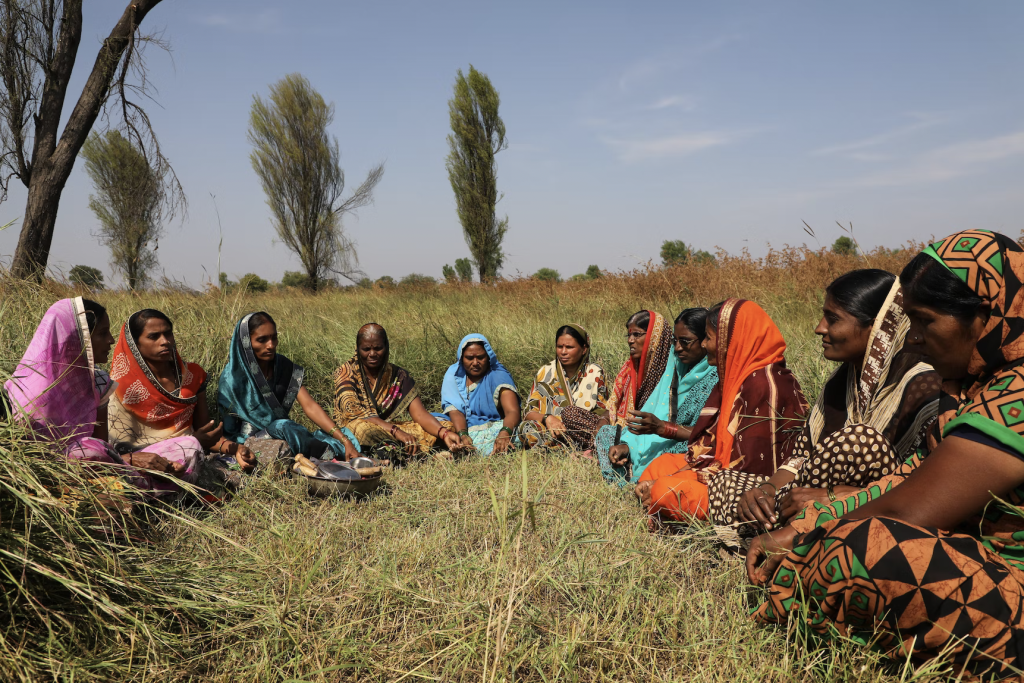
Photo caption
In Burkina Faso, the national dialogue brought together various ministries to adapt the KM-GBF to the national context. It also helped form working groups for thematic studies on monitoring, evaluation, resource mobilization and communication strategies. These efforts culminated in adoption of the revised NBSAP in August 2024, which set new national biodiversity targets and includes a comprehensive monitoring and evaluation framework.
The dialogue in Burkina Faso also addressed systemic data gaps. It served as a touch point to discuss The National Observatory for the Environment and Sustainable Development, which is a central hub for data collection and coordination. It also established a network of stakeholders to ensure effective data collection and reporting for restoration initiatives. Ultimately, this aims to enhance synergy between data producers and formal government systems to avoid fragmented efforts and incomplete data integration.
In biodiverse Peru, where progress on ecosystem restoration policies has been hindered by fragmented approaches and weakened governance, the dialogue brought together a cross-sectoral group of 59 actors to collectively and honestly reflect on the challenges and opportunities for effective implementation of Target 2.
And in Vietnam, 47 participants from national agencies, provincial environmental and agricultural departments, protected area management boards, research institutes, universities and NGOs gathered to discuss specific targets for forest, wetland, marine ecosystems and the need for legal, technical, financial, and institutional guidelines to achieve the target.
Khalil Walji, a CIFOR-ICRAF scientist and the leader of the project, said of the process: “While the gap between the global vision on biodiversity and the national action plans submitted to COP 16 remains significant, the lessons from these pilots can serve as a foundation for advancing global ecosystem restoration through better cross-sectoral coordination.”
The synthesis of the national dialogues across the four pilot countries highlights both the promising practices and significant challenges in advancing the goals of Target 2. The pilots identified five key gaps that need to be addressed to achieve transformational change: stronger policy coherence and integration; inclusive and collaborative governance; innovative financing and resource mobilization for restoration efforts; capacity building at multiple levels; and investing in comprehensive monitoring and data systems.
CIFOR-ICRAF’s support for these national dialogues drew on its experience supporting a similar process in Uganda through the Trees on Farms project. In 2024, Uganda became the first country in Africa, and the second developing nation globally, to align its NBSAP with the KM-GBF. Moreover, the Uganda plan underscored the need for restoration to integrate trees, farming and biodiversity.
“For some time now, Uganda has recognized the importance of agroforestry as an approach to sustainable agriculture,” says Philip Dobie, senior fellow at CIFOR-ICRAF in Nairobi. “Now it has linked its agroforestry targets with goals set under international biodiversity conservation agreements. In doing so, it has recognized the potential of sound agricultural landscape management for the conservation of wild biodiversity.”