









Pioneering support for national agroforestry plans
“Our initial efforts in India have truly had a global impact, even beyond the national agroforestry plans.”
Inspiring countries across the globe to embed agroforestry into national policies
Initial success in India has sparked partnerships with countries from Sub-Saharan Africa to Central America to develop own national plans
Ten years after its launch, the impact of India’s National Agroforestry Policy continues to resonate both within the country and around the world. CIFOR-ICRAF, in collaboration with CAFRI (Central Agroforestry Research Institute) and other stakeholders fostered and supported the development and adoption of the policy in 2014 – the world’s first such policy of its kind.
According to the State of the World’s Forests 2024, India’s NAFP catalysed 2.66 million hectares of forest annually from 2010 to 2020. In addition to diversifying income for farmers, the NAP also helped India reduce its emission intensity of gross domestic product by 33 percent over 2005 levels – a target reached 11 years ahead of schedule.
The momentum built through the initiatives triggered by India’s NAFP was amplified through a programme focused on trees outside forests, which supported seven Indian states to develop specific agroforestry policies. The state of Assam approved its own policy in December 2024, developed in collaboration with the Assam Forest Department. The polices of other states are at various stages of development.
Even before these outcomes, other countries in the region drew inspiration from India’s vision. With support from CIFOR-ICRAF, the Association of Southeast Asian Nations developed agroforestry guidelines in 2018 to support sustainable agriculture and environmental conservation. And in 2019, Nepal became the second country to approve and implement its own NAP.
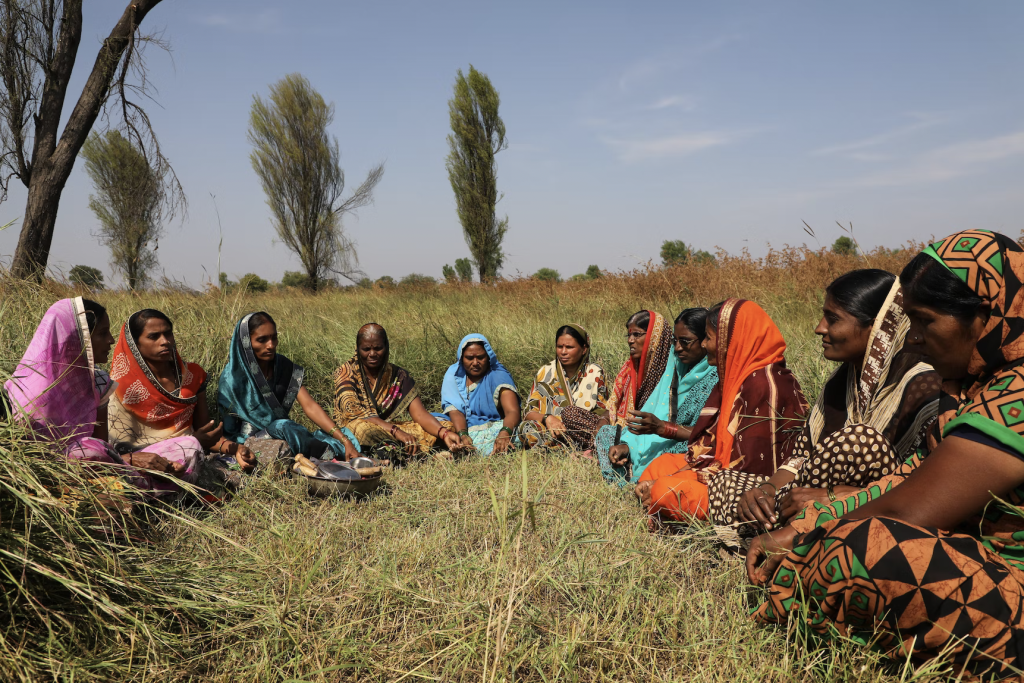
Photo caption
Since then, CIFOR-ICRAF has supported governments in Sub-Saharan Africa and Central America to develop and adopt their own strategies and plans.
As the first African country to declare an ambitious land restoration target under the Bonn Challenge and AFR100, Rwanda recognized agroforestry as a key approach and adopted a National Agroforestry Strategy and Action Plan (2018-2027), but faced implementation challenges. With high-level support through the Trees on Farms for Biodiversity and the Regreening Africa programmes, CIFOR-ICRAF supported the establishment of an Agroforestry Task Force to operationalize the strategy.
“The hope is that once the task force is fully operational, we will see a much more integrated approach to agroforestry between the two ministries in collaboration with other development partners involved in landscape restoration through agroforestry,” said Elisee Bahati Ntawuhiganayo, research assistant with ICRAF Rwanda.
The development of the National Agroforestry Strategy for The Gambia 2022-2032 was spearheaded by CIFOR-ICRAF as part of its large-scale ecosystem-based adaptation project in the country. In collaboration with partners, it also supported the establishment of a national task force to implement the strategy.
For its part, the Government of Kenya asked CIFOR-ICRAF to set up a technical committee to support the development of its national agroforestry strategy, as well as gather evidence, engage stakeholders and be part of a joint secretariat. Meanwhile, South Africa has identified the need for a national policy that would pursue global collaborations with CIFOR-ICRAF and agroforestry practitioners in India, among others. CIFOR-ICRAF also supported the development of a national agroforestry strategy in Tanzania and a National Watershed and Agroforestry Muti-Stakeholder Platform in Ethiopia, among other national policies.
As part of this global movement towards sustainable land-use practices, Belize and the Maldives have also been drawing on international best practices to develop its own national strategy, citing CIFOR-ICRAF’s expertise in agroforestry.
“The initial efforts in India have truly had a global impact, even beyond the NAPs,” said Javed Rizvi, former director of Asia for CIFOR-ICRAF. “Our pioneering work with the Odisha State of India led to the development of the highly acclaimed Agroforestry app, which not only helps farmers and extension workers find the right tree species for farms but also provides a complete solution to successfully establish agroforestry systems.” By the end of 2024, the app had been downloaded in 120 countries, and India’s Ministry of Agriculture has provided funding to CIFOR-ICRAF to adapt the app for use country-wide.