







New paradigm for cocoa farming in Ghana
“Farmers need economic rights to shade trees to make conservation financially viable.”
Climate-smart cocoa works out for Ghana’s smallholder farmers
Agroforestry approach is tackling declining crop yields and increasing drought, disease, and climate variability
As the country faces deforestation, prolonged droughts, pest and disease infestations and declining yields due to climate variability and change, Climate-Smart Cocoa (CSC) has proven to be a game-changer for farmers seeking sustainability and profitability.
Cocoa is Ghana’s top export, but the West African country has been grappling with several challenges – all while producing the main ingredient of one of the world’s cherished products. In the midst of this, Ghana’s cocoa farmers have been at the forefront of a quiet revolution – one that has reshaped how cocoa is grown while protecting forests and securing livelihoods.
The pioneering initiative, funded by the German Ministry for Economic Cooperation and Development (BMZ) via the Fund for International Agricultural Research (FIA), significantly drove uptake of CSC practices, with 1,035 farmers directly adopting CSC as a result of the project. A further 11,949 smallholder farmers, influenced by the project’s outreach and activities, adopted CSC practices indirectly. In total, no fewer than 54,341 farmers were directly reached through in-person training programmes, input and service provision, and radio programming, while additional 18,524 farmers were reached indirectly through Cocoa Health and Extension Division district activities.
As part of Ghana’s sub-national REDD+ strategy, the project focused on boosting yields without expanding farmland. It has promoted the rehabilitation of old cocoa farms, integrating CSC into national cocoa training programmes, and ensuring smallholders have access to climate-smart inputs and services – critical steps in Ghana’s fight against deforestation and climate change.
Through Collaborative Learning for Climate-Smart Cocoa (CL4CSC), CIFOR-ICRAF and SNV have establish a collaborative knowledge-sharing platform on sustainable cocoa farming and land-use pattern among farmers, cooperatives, and forest users. The results have been resounding.
A survey of 250 farmers across 10 Collaborative Learning Platforms revealed impressive adoption rates of sustainable cocoa farming practices. Notably, full-sun cocoa farming decreased by 36%, while 91% of farmers successfully rehabilitated at least one diseased cocoa farm and adopted an additional CSC practice.
Moreover, over 114,102 hectares of cocoa farmland are now sustainably managed, with 61.37% under shaded cocoa, a system that fosters better gender and age equity. Also, 8,888 hectares of degraded forest reserves was restored through Modified Taungya farms, 910 hectares of riparian buffer zones protected by Community Resource Management Areas (CREMAs), and 25,795 hectares of cocoa farmland transitioned to sustainable land use.
This initiative has changed how cocoa farming is taught and practiced. It moved beyond traditional training methods, encouraging hands-on collaboration and real-world problem-solving. But as Mawuli Sevor, a research officer for CL4CSC, points out, long-term success depends on policy reforms: “Farmers need economic rights to shade trees to make conservation financially viable. A streamlined tree-ownership process and integration into carbon cap-and-trade programs could further accelerate adoption.”
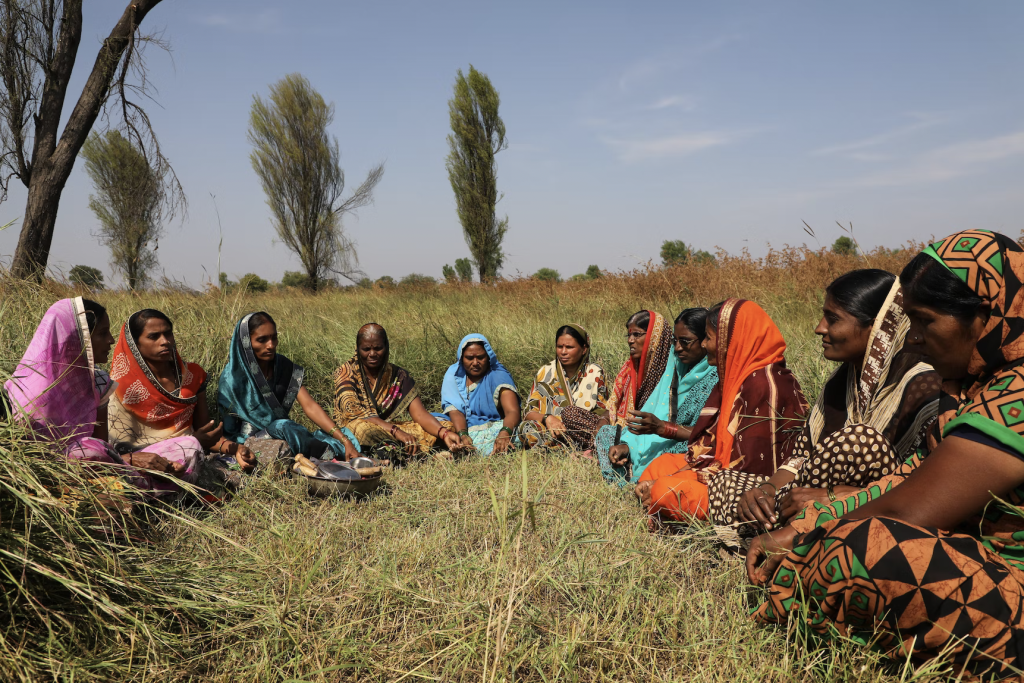
Photo caption
By promoting climate resilience, forest conservation, and sustainable cocoa production, the project has directly supported SDG 13 (Climate Action) and SDG 15 (Life on Land). With continued collaboration, Ghana would be leading the way toward a cocoa sector that works for both farmers and the environment.