




Empowering people in DRC’s Yangambi landscape
“It’s thanks to the income from the farms that we are able to send our children to school, build a house, look after ourselves.”
People and nature are thriving side-by-side in the Congo Basin
The Yangambi Engagement Landscape is demonstrating that forests need not be sacrificed for human progress
Once a quiet outpost of colonial-era research, Yangambi has evolved into a thriving hub for conservation, climate action and sustainable development. In this vibrant landscape, different stakeholders are working together to forge a resilient future where humans and nature coexist in harmony.
In the heart of the Democratic Republic of the Congo (DRC)’s forested Tshopo province, where poverty-driven deforestation has for long threatened the species-rich ecosystem, something remarkable is happening. The area which was much more silent eight years ago in now buzzing with a panoply of activities, notably the testing of new agroecological methods and planting of fast-growing and indigenous trees.
This transformation is being driven by the Yangambi Engagement Landscape (YEL) – an innovative programme that is about protecting forests by empowering local people who depend on it for survival to protect it through sustainable livelihoods.
Funded largely by the European Union and in part by the Kingdom of Belgium, USAID, Good Energies Foundation and others, one of the initiative’s outstanding achievements is the restoration of degraded land. So far, over 3 million fast-growing and indigenous trees have been planted on 3,600 hectares of degraded land restored through agroforestry plantations. Some additional 3,000 hectares have been planted with improved seeds.
For many families in Yangambi, who hitherto solely depended on the forest for their livelihood through logging or swidden farming, YEL is offering them new ways to earn a living that don’t come at the expense of the environment. Through tailored practical trainings in YEL’s pilot farms, demonstration fields, and Farmer Field Schools, locals are learning how to grow food in ways that restore the land.
Women’s cooperatives are harvesting and selling non-timber forest products like honey and medicinal plants, while eco-tourism initiatives are attracting visitors eager to explore one of Africa’s most biodiverse landscapes.
Families who once struggled to put food on the table now have stable incomes, and the need to cut down trees for survival is rapidly decreasing. Lucie Liongo Kimbwaka of the Tombwa ya Mboka Farmer Field School said the knowledge gained from the training has enabled her to make ends meet. “It’s thanks to the income from the farms that we are able to send our children to school, build a house, look after ourselves and so on.” Another community member, Jean Pierre Botomoto Bosunga, said: “The fruit trees planted in our community with the support of the project have changed our diet and become a source of income.”
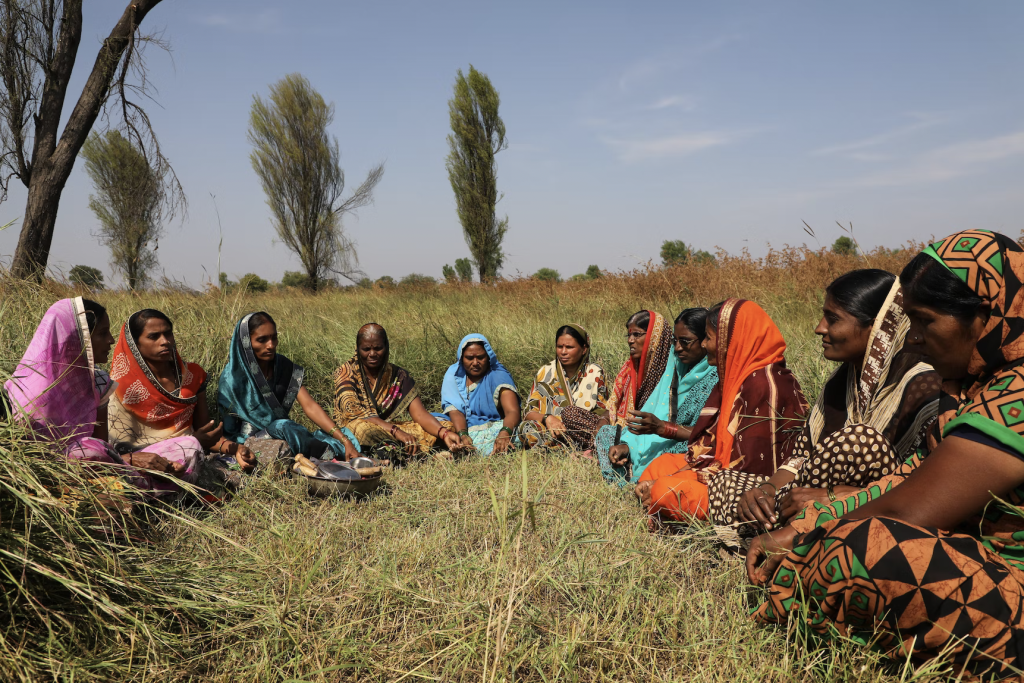
Photo caption
Another remarkable thing about Yangambi is the provision of standpipe wells to communities in the landscape, lightening the burden of household chores by providing drinking water at doorsteps and shortening the tiresome distance often covered by women to fetch water.
In addition, the initiative has covered the construction of a first batch of six seed warehouses, and strengthened the agriculture value chain to prevent post-harvest losses.
By weaving together conservation, community empowerment, and cutting-edge science, Yangambi is proving that a different kind of future is possible – one where forests aren’t sacrificed for progress, but become part of it.